

subtraction
2/8 — the second rule of her way club (aka: how to change your life in 6-12 months)
Continuing our 8 rules of her way club series. If you’re just joining, begin here:
1/8 — deciding to play by your own rules
2/8 — subtracting what doesn’t belong
3/8 — the natural consequence: uncertainty
interlude — her way deep rest
4/8 — trust yourself
5/8 — inner life
6/8 — outer life
7/8 — life design
8/8 — creator
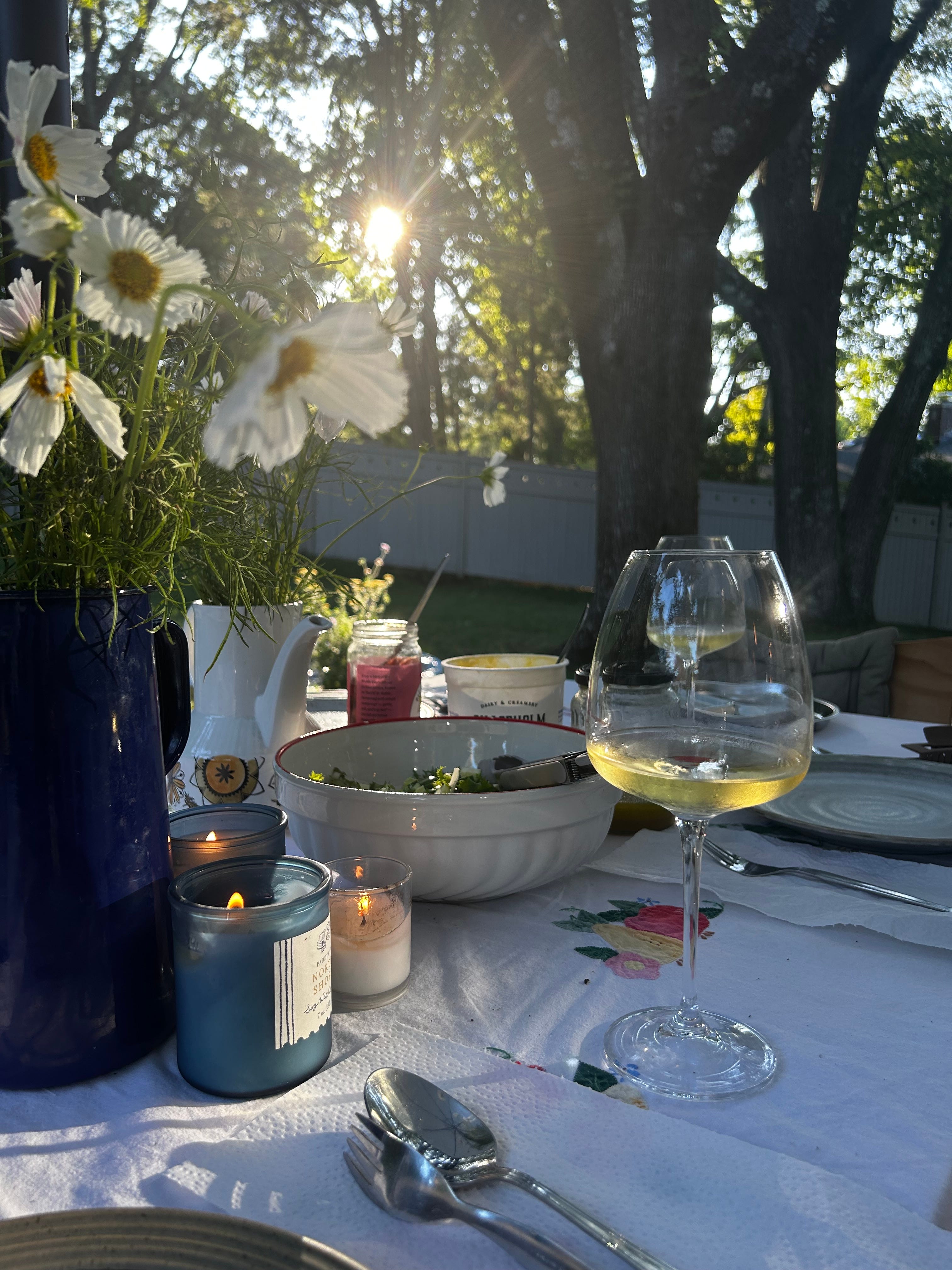
We were sitting in my friend’s garden in upstate New York a few weeks ago. Both of us trying to reclaim our lives after they had been dismantled by forces beyond our control. Our conversation hummed with ways to feel just a little lighter when everything seemed too heavy.
The afternoon air was warm and green. Bees staggered from flower to flower. Cooled white wine warmed in the sun. Behind us, the house held the relief and wreckage of recent change. Boxes half unpacked, a rug rolled like a sleeping animal, the door left open to catch whatever breeze might pass. My chest felt unsteady, as if the ground under my ribs kept shifting. Hers too.
“The one thing that works for me when I’m deeply unhappy, when life feels misaligned and everything seems to be falling apart, is subtraction,” I said. “It’s looking at my life and stripping away anything that doesn’t make me feel good. Habits. Expectations. Commitments. Thoughts. Words. It’s usually less about what I need to add, and more about what I need to put down.”
Her face lit up. “I think that’s what I need to do, too. Remove everything that isn’t essential to the life I’m rebuilding.”
Life is so much better when you know what you’re living for.
Most of us have been tricked into thinking that “more” equals fulfilment. That meaning comes from piling more onto our plates. More doing, more striving, more proving. A fancier job title, a fuller calendar, a prettier home, a shinier version of ourselves.
And yet, the moments I’ve actually felt joy, contentment, relief, almost always arrive after letting something go. After I’ve stopped trying so hard to live up to some imaginary standard. After I’ve decided not to carry what wasn’t mine.
We are far better at adding than subtracting. Adding habits, projects, rules, identities, expectations. A way to reassure ourselves that we’re worthwhile, lovable, keeping up.
But what if the thing we actually need isn’t more? What if it’s less? A stripping down, a paring back, until what remains feels closer to who we are at our core.
Subtraction is the quiet art of laying things down. It brings us back to center without scolding ourselves. It builds a frame we actually want to live inside.
It asks simple questions: What habits, expectations, commitments, thoughts, words, beliefs, practices, attitudes, people, places can I subtract to get my life back on track? Where have I gotten sloppy? Where am I leaking energy, quietly wasting the life force I will never get back?
And then, decide for yourself what that is and how much is enough.
At a party on Shelter Island, Kurt Vonnegut tells Joseph Heller that their host, a hedge fund manager, made more in a single day than Heller earned from Catch-22 in its entire history.
Heller shrugs.
“Yes,” he says.
“But I have something he will never have: enough.”
Knowing what you have is enough is a quiet power.
Enough steps walked. Enough friendships. Enough discipline. Enough money. Enough clothes. Enough love. Enough joy.
It’s the pause in your chest when you could go for more but don’t.
It’s the quiet nod in your mind that says: this is enough.
Enough is peace, it’s relief, it’s contentment. It’s seeing what you have, what you’ve built, what you’ve earned and letting it be enough.
It’s the opposite of greed. and the opposite of more. It’s radical. In a world that screams more, more, more, saying enough is rebellion.
The way you know it for yourself — the way you choose it — is exactly like the way you decided if you’re in her way club last week (or not.) You stop inheriting other people’s scoreboards. You stop following their timelines, their expectations, their “shoulds.” You pause. You look at your own life. You name what nourishes you, what sustains you, what fills your essence.
You decide: this is enough for me.

From that clarity comes another quiet practice: negative gratitude.
It’s giving thanks for the things you don’t have. For the health issues that never arrived. For the responsibilities you don’t carry. For the lifestyles, people, pressures that could have crushed you but didn’t. For the “no’s” that gave you freedom.
We’re always told to be grateful for what we have. And we are. But what about what we’re relieved of? The space, the energy, the freedom quietly gifted by what is absent?
Take a moment. Look around. What’s missing in the best way possible? What doesn’t exist in your life that makes it lighter, easier, more yours?
Negative gratitude trains your attention to absence as well as presence. It shows you where you’ve already been spared, already held, already enough.
Write it down. Say it out loud. Feel it. Let it settle in your chest. Let it remind you: life is not just what arrives, it’s also what doesn’t.
In that garden, with my friend, subtraction, accompanied by enough-ness and negative gratitude, began to feed the same thing: choosing lightness where we can, so that what remains has room to grow roots.
We exchanged whispered subtractions, starting small. A newsletter I wasn’t reading, a recurring Zoom meeting that made me tense, a habit of scrolling before bed.
Each tiny release returning air to our lungs, giving space to our souls. By the time the sun dipped behind the trees, the practice of subtraction transformed from a theory into a reclamation.
a practice for you:
Take fifteen minutes today to look at your life through subtraction. Grab a notebook or your phone. Make a quick inventory: habits, commitments, expectations, thoughts, people, places, anything that quietly drains you or keeps you from feeling like yourself. For each one, ask: Does this nourish me? Does this serve me? If the answer is no, make a note to let it go.
Imagine letting go of a routine self-talk you give yourself without thinking. Every morning that you think, “I should do better,” or “I need to push harder,” like a mantra. It feels harmless, even responsible. But it’s not. It’s a subtle weight you carry, a quiet pressure that shapes your whole day before it’s even begun.
What if you simply stopped? Not replaced it with another mantra. Not “I am enough” or “I can do this.” Just stopped.
The silence that replaces it is startling at first. Your chest feels lighter, your mind less crowded. Instead, you notice the warmth of the sunlight on your skin, the rhythm of your breath, the hum of life around you that had been muted by the constant mental checklist. That small, almost invisible habit of self-criticism had been subtracting from your energy for years, quietly shaping your hours into tension and obligation. Releasing it doesn’t make you lazy or complacent. It makes you present, aligned, capable of pouring your attention into the things intentionally.
the NO list:
Here’s a little thing I love doing. I call it the NO list. It’s exactly what it sounds like: a list of all the things you’re done with. All the stuff you’re letting go of. All the habits, commitments, obligations, and little drains you no longer have to carry.
Grab a notebook, a piece of paper, your phone, whatever works. Set a timer for five minutes. Write fast. Write messy. Don’t censor. Just let it pour.
What are you done saying yes to?
What are you done carrying?
What are you done pretending is necessary?
It could be huge: “I won’t take on another project that burns me out.”
Or tiny: “I won’t scroll Instagram first thing in the morning.”
It can be easy: “I won’t drink coffee past noon on weekdays.”
Every NO you write is like a little exhale. A clearing. Space for more energy, more focus, more joy.
When you’re done, leave it somewhere you’ll see it. Saying no is saying yes to yourself.
Optional: Share one NO in the comments. Let’s celebrate the things we’re done with.
a micro-vow:
Before you close this tab, pick one thing you can subtract this week. One habit, one commitment, one mental loop. Say to yourself: I release this. I make space for what truly matters.
comment below:
What’s one thing you can subtract, a sense of ‘this is enough’ or a negative gratitude this week that will bring you closer to yourself? What’s the thing on your ‘NO’ list that you’re most excited about letting go? Share it below, so we can be inspired by each other.
I won’t be available to everyone all of the time, even for little things. 😊
This piece really speaks to me. The idea of having enough, being content, is so underrated — and yet it’s a radical act in a world that constantly tells us we don’t have, do, or are enough. It’s a daily practice!
One question that always grounds me, when I catch myself slipping into the wanting more, is: What if this is enough? What if this moment is enough? What if I am enough? What if my life, just as it is, is already enough? That question instantly brings me back to myself and helps me focus on what truly matters.
I say no to making life heavier than it has to be — especially when a softer way is possible.
Thank you so much for this beautiful reminder. 💛